Thursday, August 16, 2018

City Reports Focus on Future of Waste Services

On Thursday, August 23, the City's Utility Committee will discuss eight separate reports about the future of waste management in Edmonton.

Of the eight reports, three ask councilors to make decisions on the following topics:
  • Alternate Collection and Diversion Options for Grass, Leaf and Yard Waste
  • Source Separated Organics Pilot
  • Industrial, Commercial and Institutional Sectors Strategic Review
"Years ago, we set an ambitious goal: to divert 90 per cent of residential waste from the landfill. Right now, we're not close enough and we have to look at new ways to do things," says Michael Labrecque, Branch Manager, Waste Services. "For over a year, we've reviewed our programs and looked at what other cities are doing well. From this, we know we need to put more emphasis on waste reduction and prevention, and that means
looking at how residents set out their waste, what waste gets collected, when, and how.
This is a topic that affects every Edmontonian, and we look forward to supporting City Council as they determine the best direction for our city."

Below is a quick summary of what Edmontonians can expect to see debated at Utility Committee:
  • Waste Services' Four-year Business Plan: Provides a strategic overview for
    2019-2022. This report outlines the priorities for the upcoming four-year budget
    cycle, including key initiatives, performance indicators and the utility rate.
  • Waste Services: 25-year Strategic Outlook: Outlines key focus areas for the
    updated waste management strategy as it pertains to regulated waste services
    (such as single-unit and multi-unit properties), as well as non-regulated  waste
    services (such as commercial and industrial waste). The report also provides an
    overview of public engagement beginning in fall 2018.
  • Alternative Collection and Diversion Options for Grass, Leaf and Yard Waste:
    Details options for removing grass waste from regular waste collection,
    implementing seasonal collection of leaf and yard waste, and providing
    alternative disposal programs for both. The report outlines three options based
    on operational and financial considerations as well as public engagement.
  • Source Separated Organics Pilot: Outlines options for a source separated
    organics program testing phase prior to the planned 2020 program
    implementation. Four options are presented, as well as details of planned public
    engagement. Following public engagement, Administration will make a formal
    recommendation to Utility Committee about final details for the testing phase,
    involving 5,600 homes across the city.
  • Industrial, Commercial and Institutional Sectors Strategic Review: Provides
    an overview of the operations of Waste Services' non-regulated business lines.
    The report recommends revisiting the overall strategic approach, including a
    targeted engagement program. With respect to the current construction and
    demolition (C&D) waste processing operations. Administration recommends an
    immediate review of the business model to determine whether restructuring can
    better position operations to meet financial and environmental goals.
  • Extended Producer Responsibility: Gives a review of extended producer
    responsibility policies and programs (waste reduction, reuse and recycling
    activities) in other jurisdictions. Outlines potential opportunities and details on
    how an extended producer responsibility policy would affect Edmonton's waste
    program.
  • Food Waste Reduction: Details options for food waste reduction strategies,
    including potential partnerships, public education campaigns and examples from
    other municipalities, along with measures of effectiveness.
  • Reduction and/or Elimination Mechanisms of Single-use Plastics: Provides
    an overview of current practices in other jurisdictions to reduce and/or eliminate
    the use of single-use plastics such as plastic bags, cups and straws.
Visit edmonton.ca/meetings for the full reports.
(Utility Committee -- Agendas, Minutes and Video).

Wednesday, August 1, 2018

Tell One Friend: "No Drinking Straw, Thank You"

Try this polite request to start meaningful conversations about waste..

Drinking straws are helpful tools in our daily lives. We see them everywhere and everyday. And some people really need them, especially people with disabilities. Then again, most of us don't need a drinking straw every time we dine out.

Politely decline a drinking straw and start a conversation.

Drinking straws are also a good way to start a conversation about garbage. They are a familiar example of single-use waste. Ask friends at your table what single-use items they can reduce.

Try these tips to connect with friends, family, neighbours, and co-workers.

One Small Ask
"How about this. Would you try going without straws for just ONE week?"

Prompt Them
"By the way, guys, when our server comes around, I am going to order my beverage without a drinking straw. Who's with me?"

Give Positive Feedback
"Thanks for joining me."


Monday, July 30, 2018

Your Thoughtful Opinion Counts

Another installment about Effective MCR Conversations

Have you found yourself saying something like this?
  • "I watched a video on CBC about recycling, last night, and..."
  • "According to Mark Cullen, grasscycling is good for my lawn."
What you think counts even more than you think.

Everyone bases our everyday decisions on the thoughtful guidance of our peers. We take short-cuts by listening to what others have learned and their thoughtful opinions. We listen, we reflect, and we select the best perspectives for ourselves.


In fact, your opinion matters more than what you've read. Yes, friends like that you read stuff and you listen to experts.  BUT what really counts is that you reflected on the topic and built an opinion.


Sometimes we distance ourselves by talking through someone else. It's seems less risky to say, for example, "The City wants everyone to go bagless" But that statement makes going bagless about the City, not about you, not your neighbour, and not even about the grass.

Own your opinion and share it, respectfully.
Try something like "I go bagless because ..." This makes the topic more personal.

Do NOT push your opinions on others. Share how you see the world.

We all look for the opinions of people we trust. As an MCR, you have an informed opinion about Edmonton's waste system: share it.

Coming Soon: MCR Update Sessions

Of course, it's important to have up-to-date information. The MCR Team will host MCR Update Sessions in October. Come out and learn about changes to Edmonton's waste system.

More "Effective MCR Conversations"

Wednesday, July 18, 2018

Find Common Ground

Another installment about Effective MCR Conversations

We've all met someone who simply "doesn't get it." They buy disposable everything or maybe they don't care about climate change. It's like you see the consequences of their actions, but they don't. 

You don't want to argue with them, but you also know this is precisely the person we need to chat with. Don't start listing arguments that will convince them to change ways.

Start by finding common ground.

Take a deep breath and look for what you have in common. Statistically speaking, all humans have more in common than we have different. In fact, common ground is not hard to come by. In some cases, it is almost universal.

People are more likely to be influenced by those they perceive to be much like themselves. We look to base their opinion on people with whom we have something in common.


It doesn't take much. You might comment on food they bought - saying how you really enjoy food at this particular fast food restaurant. You might hint at the challenges of parenthood. The weather is a good one: we are all subjected to the same weather.

You may say something like: "Wow, I see that you got food from [insert fast food place]. I love that place. Do you come here a lot? I find they give out a lot of disposables so I try to bring a reusable container with me whenever I go there for lunch". 

It's important to be genuine. Don't invent stuff. Simply connect on a human level.

This skill comes with practice.

Your first goal is building a rapport and planting a seed.

What are your successes with finding common ground? Share in a comment, below.

More "Effective MCR Conversations"


Friday, July 13, 2018

Master Composter Recyclers Help Edmonton Re-Naturalize

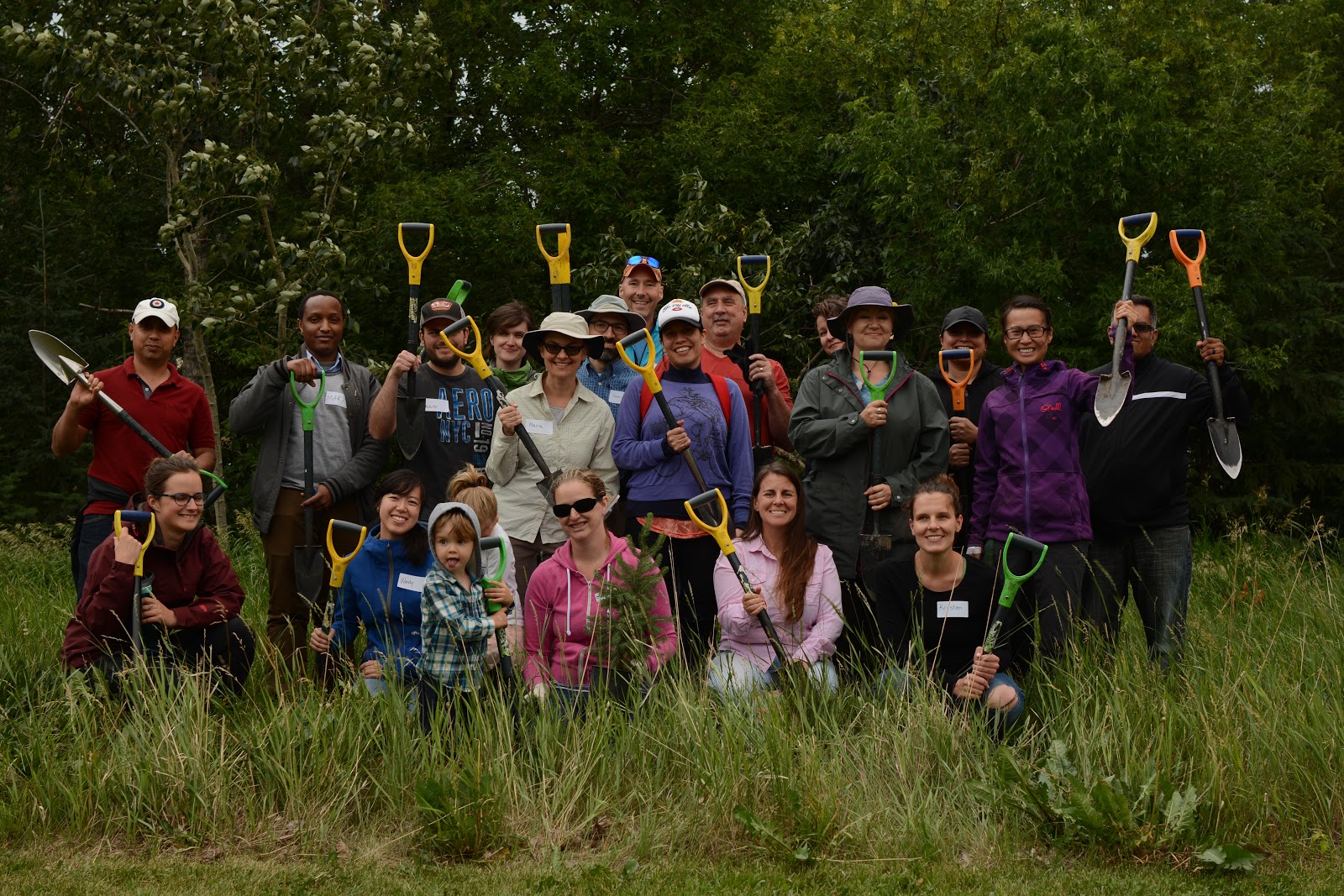
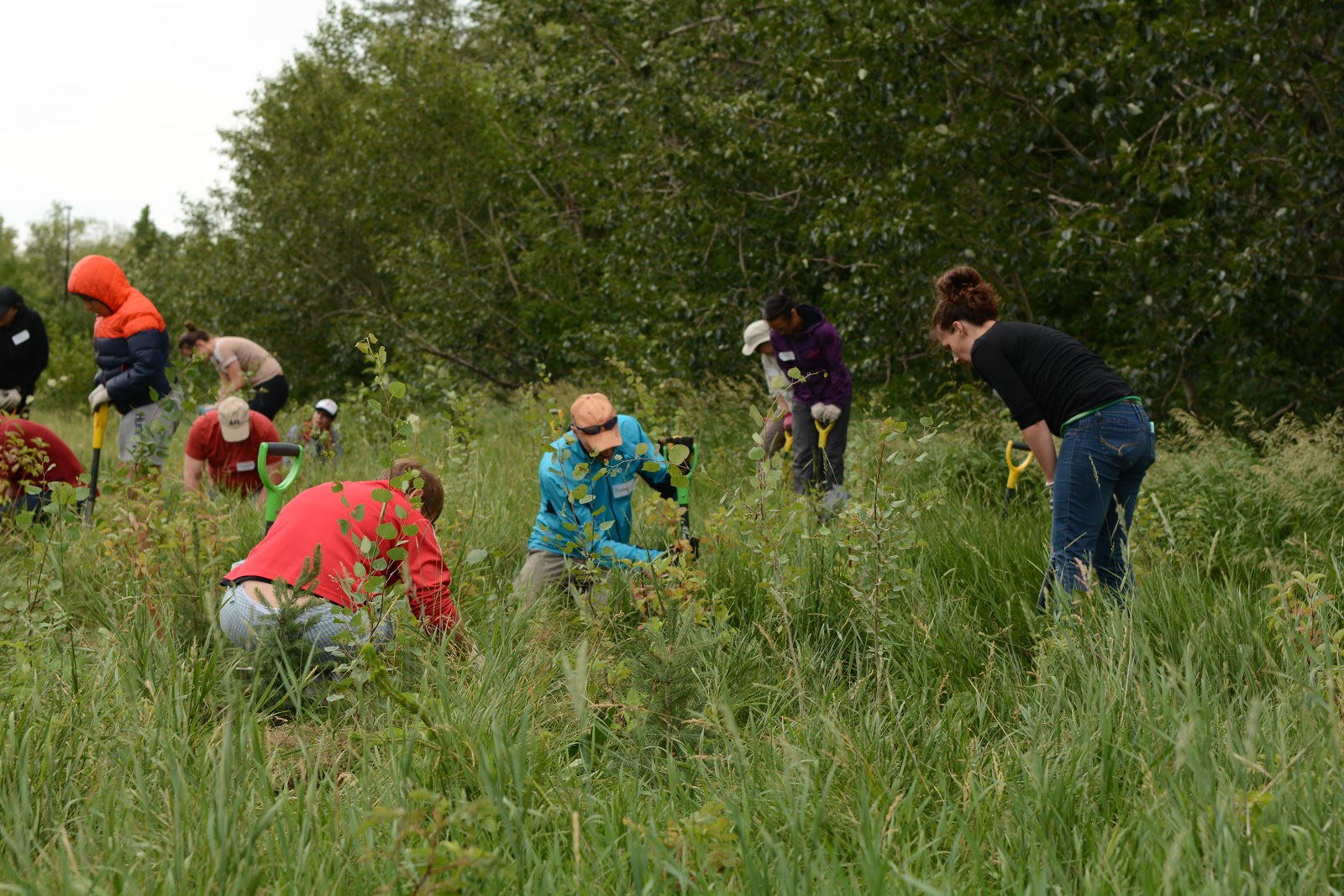
Last Tuesday, MCRs planted 207 trees & shrubs at our annual summer planting event.  Thanks to everyone who came out. It was a big success.

We finished planting just before the rain and thunder came and all the plants benefited from warm showers, later that night. Perfect timing!


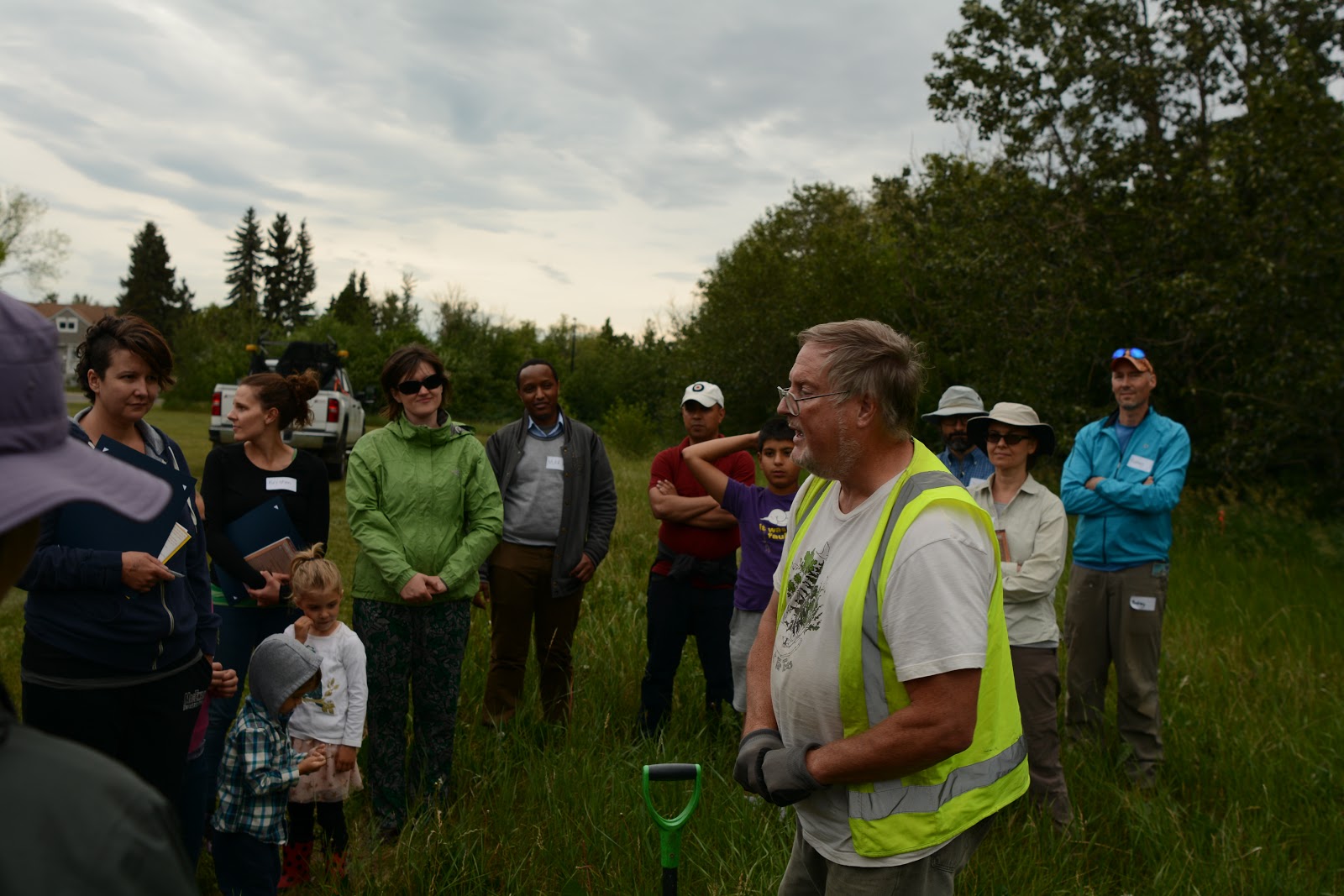
Staff with the City of Edmonton's Root for Trees program taught us about naturalization of urban areas. This includes letting the grass in an area grow (no mowing) in the first year and planting trees and shrubs in the second year. The new plants slowly take over, returning the area to a more natural landscape.


All in all, it takes several years to naturalize an area. Naturalization increases Edmonton's urban forest and offers many benefits. For one, this reduces mowing and maintenance.


MCRs chatted while we planted. The 175 trees & shrubs and 32 wildflowers included trembling aspen (Populus tremuloides), white spruce (Picea glauca), red osier dogwood (Cornus sericea), prickly rose (Rosa acicularis), and graceful cinquefoil (Potentilla gracilis).

Thank you, once again, to everyone who came out.