Showing posts with label waste reduction. Show all posts

Wednesday, December 4, 2019

Create Memories, Not Waste

Tricks and tips on how to reduce waste during the holiday season.


The holiday season is a special time. We search for the perfect gifts for loved ones, wrap them, decorate, and celebrate with food, drink and endless cheer.

While traditions are important, it’s also important to be mindful of our waste during the holiday season. Did you know Edmonton household garbage nearly doubles during this time of year?

“There are so many gifts to give that don’t produce garbage,” says Rodney Al, Master Composter Recycler Program Coordinator. “I encourage people to consider less wrapping and more reduction.”

This year, try giving the gift of experience. Take in a concert with a friend, sign you and a loved one up for a cooking class, or enjoy a dinner out, your treat! You can even gift someone an annual subscription to a streaming service or consider donating your skills or time to the recipient’s favourite charity.

Not in to giving experiences? Embrace your skills and come up with something creative like crocheted mittens, a scarf or blanket. Another great gift is food or baked goods. Bake your loved one some cookies or gift your friends a jar of homemade salsa or jelly. Homemade gifts and food are always more personal and sentimental.

If you plan to give a gift that requires wrapping, try to make the wrapping part of the gift. Wrap the gift in a nice scarf, bandana, kitchen towel or shawl. You can also use scrap fabric leftovers from other projects or find some at the Reuse Centre or a local thrift store.

Lastly, donate holiday items you no longer need to the Reuse Centre, or purchase as many holiday items as you need for only $5 (up to 25 kg) including artificial trees, decorations and gift wrap.

Be sure to share your favourite holiday waste reduction tip on Twitter, Facebook or Instagram, using the hashtag #WastelessHolidays, and you could win 1 of 10 wasteless prizes.

Visit edmonton.ca/wastelessholidays

Monday, February 4, 2019

Tell One Friend: Be WasteWise When You Declutter!

Try this polite request to start meaningful conversations about waste.

Kudos to the #KonMari method and those out there decluttering their lives! Marie Kondo has sparked a decluttering movement across the world and you've probably heard about thrift shops and donation centres benefiting from this. This is great! Further, this begs the question, for those items in your life that don't spark joy -- where do they end up? Where do they belong?

Please be mindful of your waste as you declutter. Take a moment to learn What Goes Where. Reuse is always a better option than recycling or throwing something into the landfill.


Share Your Message Effectively

Try these tips to connect with friends, family, neighbours, and co-workers.

Model the Behaviour
Show friends and family when you check What Goes Where on edmonton.ca/waste.
"Let's just check before we toss it. It's on edmonton.ca/waste."


Make it Normal
Post about donating decluttered items to the City of Edmonton's Reuse Centre. Mention their list of accepted items.

Offer Timely Prompts
Post the What Goes Where poster where family and friends can see it, when they are decluttering.


Give Positive Feedback
"Thanks for making sure that your clutter doesn't junk up the landfill."


Highlight the Benefits
Be mindful of your waste while you declutter and help Edmonton divert as much waste as possible from landfill.


Now that you have some tips in your back pocket, check out...


Wednesday, December 12, 2018

Tell One Friend: Reduce Holiday Gift Wrap

'Tis the season to celebrate the holidays by enjoying delicious meals with friends and family and exchanging gifts.  Did you know that waste increases in Edmonton around this time of year?

One way to cut down on the amount of waste this holiday season is to choose to wrap gifts with reused or recyclable materials.  Did you know that most traditional gift wrap, bags and bows are not recyclable and end up in the landfill?

Why not choose to go with a greener gift wrap option, this year?

5 Creative Ways to Wrap Your Gifts
  • Wrap gifts in fabric. A great option is to make the wrapping part of the gift by using tie headbands, bandanas, scarves, or for the fabric enthusiast in your life, a piece of their favourite designer fabric. Did you know that fabric wrapping is also known as the the Japanese art of Furoshiki?
  • Reuse fabric bags. Some bedding sheets come in a fabric bag at the time of purchase. These bags are easy to re-use to wrap a gift, or two! They are especially handy to re-use by the recipient as well.  Kids can store their art supplies and toys in while on-the-go, or you can organize a suitcase while travelling. Tie the fabric bag’s drawstring in a bow, add a re-used card gift tag and voila!
  • Reuse maps, newspaper and calendars. Since most people depend on electronic maps, such as GPS, for directions, paper maps are a great item to use as gift wrap! Ask your friends, family or your local buy sell group if anyone has any to spare. Calendars are also a great option. You can finish your wrapping with a decoration by cutting the paper into thin strips and curl with scissors.
  • Use brown kraft/packing paper. Whenever a package arrives in the mail, keep the brown paper wrapping. Smooth it out and fold it for future use! This paper can be stamped, coloured or finished with natural twine or a small piece of a spruce tree for a classy looking wrapped gift.
  • Reuse gift boxes, bags and bows. Have any leftover wrapping from gifts of years passed? Re-use the items for this year’s holiday season!
Challenge those who you exchange gifts with to use a more sustainable option this holiday season. Visit the Reuse Centre to find reuse items to wrap gifts in this holiday season. 

Share pictures and ideas of your gift wrapping. Email mcrp@edmonton.ca.  

Wednesday, November 14, 2018

Tell One Friend: Pack a Reusable Mug

Grabbing a coffee? Pack your reusable mug!

Edmontonians love a cup of coffee or tea on the go. It's warm and tasty on a chilly day. But all too often, that hot cup of deliciousness comes in a single-use, disposable cup.

How many times have you remembered to bring a mug with you for your morning coffee, or for that afternoon pick me up? Imagine the amount of disposable cups in the garbage every day if every Edmontonian bought a hot beverage.  Think about it; if you bought a beverage every day and left your mug at home each time, you would use at least 30 disposable cups per month.   That's a lot of cups!

5 tips to keep your beverage hot and be waste wise

  1. Pack a reusable mug.
  2. Ask your barista to use your mug when preparing your drink.
  3. Help your barista by knowing how much liquid your mug holds.
  4. Find coffee shops that offer a discount for reusable mugs.
  5. Keep the coffee line moving. Be clear, polite, and have your payment ready.
Remember: A reusable coffee mug makes a great gift and keeps beverages hot for those coffee, tea, or hot chocolate lovers in your life.


Tips for Changing Waste Behaviours

Make It Normal: Be a Role Model
Use your reusable mug. Others will notice and will encourage others to use their mug too.

Prompt a Friend
Ask questions like, "How will you remind yourself to pack a mug?" or "would you set a reminder on your phone to pack your mug?"

One Small Ask
Get their commitment with a small request, such as "Can I count on you to pack a mug in your car or bag?"

Prompt a Friend
"If you already have a mug in the car, will you take it into the coffee shop? Shops are happy to fill your mug instead of a disposable one. You can even use it for cold beverages."

Give Feedback
Acknowledge their effort and give encouragement, like "Oh, I love your reusable mug. Your one step helps the environment and cuts down on single-use items."

Visit edmonton.ca/waste to learn What Goes Where

Wednesday, October 3, 2018

Time to Talk the Future of Waste

Changes are coming to the way you sort and manage your household waste. Edmontonians are invited to help adjust and shape these changes by providing feedback in person or online.

Topics for discussion include; four options for curbside garbage setouts, food waste and reuse, single-use plastics restrictions and more.

Feedback gathered will help shape final program recommendations presented to City Council in 2019. The recommendations will support the City of Edmonton’s focus on increasing the diversion of residential waste from landfills.

Visit edmonton.ca/futureofwaste

Next Tell One Friend: Pack a Reusable Mug


Wednesday, September 26, 2018

Tell One Friend: Time to Talk Future of Waste

Waste Services is proposing big changes to the way Edmontonians sort and manage their waste at home and work. You can help shape your future waste management system!

Everyone has a role to play in managing Edmonton’s waste, to ensure a cleaner, sustainable future for our city. This fall, the City will be seeking input from Edmontonians about these proposed changes.

We need your help -- tell your friends, family, colleagues and community members about upcoming public engagement opportunities, and encourage them to participate. Share your voice, shape your city.

From October 1 - November 15, 2018, residents can attend an upcoming drop-in session and complete our online survey.

Sign up for our monthly Future of Waste e-news, for updates and upcoming public engagement opportunities.


One Small Ask
“Will you go to the web page and look at the survey? You can decide if you have the time to complete it”

Give Feedback
“Hey, I saw you at one of our Future of Waste drop-in sessions. That’s great you’re being active in the community and sharing your voice.”

Create Social Norms
“There are a lot of people in our community sharing their thoughts about the proposed waste collection changes. Have you shared yours through the survey or at a drop-in session?”


Visit edmonton.ca/futureofwaste or call 311.


Thursday, August 16, 2018

City Reports Focus on Future of Waste Services

On Thursday, August 23, the City's Utility Committee will discuss eight separate reports about the future of waste management in Edmonton.

Of the eight reports, three ask councilors to make decisions on the following topics:
  • Alternate Collection and Diversion Options for Grass, Leaf and Yard Waste
  • Source Separated Organics Pilot
  • Industrial, Commercial and Institutional Sectors Strategic Review
"Years ago, we set an ambitious goal: to divert 90 per cent of residential waste from the landfill. Right now, we're not close enough and we have to look at new ways to do things," says Michael Labrecque, Branch Manager, Waste Services. "For over a year, we've reviewed our programs and looked at what other cities are doing well. From this, we know we need to put more emphasis on waste reduction and prevention, and that means
looking at how residents set out their waste, what waste gets collected, when, and how.
This is a topic that affects every Edmontonian, and we look forward to supporting City Council as they determine the best direction for our city."

Below is a quick summary of what Edmontonians can expect to see debated at Utility Committee:
  • Waste Services' Four-year Business Plan: Provides a strategic overview for
    2019-2022. This report outlines the priorities for the upcoming four-year budget
    cycle, including key initiatives, performance indicators and the utility rate.
  • Waste Services: 25-year Strategic Outlook: Outlines key focus areas for the
    updated waste management strategy as it pertains to regulated waste services
    (such as single-unit and multi-unit properties), as well as non-regulated  waste
    services (such as commercial and industrial waste). The report also provides an
    overview of public engagement beginning in fall 2018.
  • Alternative Collection and Diversion Options for Grass, Leaf and Yard Waste:
    Details options for removing grass waste from regular waste collection,
    implementing seasonal collection of leaf and yard waste, and providing
    alternative disposal programs for both. The report outlines three options based
    on operational and financial considerations as well as public engagement.
  • Source Separated Organics Pilot: Outlines options for a source separated
    organics program testing phase prior to the planned 2020 program
    implementation. Four options are presented, as well as details of planned public
    engagement. Following public engagement, Administration will make a formal
    recommendation to Utility Committee about final details for the testing phase,
    involving 5,600 homes across the city.
  • Industrial, Commercial and Institutional Sectors Strategic Review: Provides
    an overview of the operations of Waste Services' non-regulated business lines.
    The report recommends revisiting the overall strategic approach, including a
    targeted engagement program. With respect to the current construction and
    demolition (C&D) waste processing operations. Administration recommends an
    immediate review of the business model to determine whether restructuring can
    better position operations to meet financial and environmental goals.
  • Extended Producer Responsibility: Gives a review of extended producer
    responsibility policies and programs (waste reduction, reuse and recycling
    activities) in other jurisdictions. Outlines potential opportunities and details on
    how an extended producer responsibility policy would affect Edmonton's waste
    program.
  • Food Waste Reduction: Details options for food waste reduction strategies,
    including potential partnerships, public education campaigns and examples from
    other municipalities, along with measures of effectiveness.
  • Reduction and/or Elimination Mechanisms of Single-use Plastics: Provides
    an overview of current practices in other jurisdictions to reduce and/or eliminate
    the use of single-use plastics such as plastic bags, cups and straws.
Visit edmonton.ca/meetings for the full reports.
(Utility Committee -- Agendas, Minutes and Video).

Wednesday, August 1, 2018

Tell One Friend: "No Drinking Straw, Thank You"

Try this polite request to start meaningful conversations about waste..

Drinking straws are helpful tools in our daily lives. We see them everywhere and everyday. And some people really need them, especially people with disabilities. Then again, most of us don't need a drinking straw every time we dine out.

Politely decline a drinking straw and start a conversation.

Drinking straws are also a good way to start a conversation about garbage. They are a familiar example of single-use waste. Ask friends at your table what single-use items they can reduce.

Try these tips to connect with friends, family, neighbours, and co-workers.

One Small Ask
"How about this. Would you try going without straws for just ONE week?"

Prompt Them
"By the way, guys, when our server comes around, I am going to order my beverage without a drinking straw. Who's with me?"

Give Positive Feedback
"Thanks for joining me."


Sunday, July 1, 2018

Tell One Friend: Mow High, Mow Often


Do you leave your clippings on the lawn? Remember to mow high and mow often.

Mowing high ensures that your clip only 1/3 of the length of the grass blades, each time. Small clippings also break down easily. Mowing often develops a deep, extensive root system and leaves little room for weeds to grow.
  • Raise your mower blade to medium range.
    Mow to the height of your pinky, or 6 to 8 cm (2.5 to 3 inches).
  • Mow about every 4 to 5 days during the heavy growth season.
    When growth is slower, cutting once a week or less will suffice.
  • Sharpen the blade. It's makes for a sharp-looking lawn.
    Grass recovers more quickly when cut cleanly.
Help your friends and neighbours keep it simple.

Prompt Them
"It's really simple to leave my clippings on the lawn. I don't cut off too much of the grass at a time. I mow regularly, but I don't have the hassle of bagging and dragging my grass."

One Small Ask
"Can I show you how to raise the blade on your mower? You can decide what length to go with afterwards."

Give Feedback
"I love how lush your lawn looks, and I noticed you leaving the clippings on the lawn. Will you get in touch if you ever need help?"


Did You Know?
It is not too late to go bagless if the grass has grown a bit too long. Just raise your mower blade to the highest possible setting. Go over your lawn once, then lower the blade it to a medium range, and mow the lawn a second time. It will still be more time effective than bagging your grass and ensures your clippings remain small enough to break down efficiently.

Visit edmonton.ca/gobagless
Visit edmonton.ca/waste to learn What Goes Where.

Next Tell One Friend: "No Drinking Straw, Thank You"
Previous Tell One Friend: Make Waste-Wise Actions Visible


Wednesday, June 6, 2018

Tell One Friend: Make Waste-Wise Actions Visible

Leaving your compost bucket somewhere visible shows friends and family that composting is a normal part of running a healthy kitchen. It also makes for a great conversation starter.


It's time to show off your collection of compostables and ask you friends to do the same. Leaving it out on the counter has the benefit of showing that it is easy to use and to empty. 

Prompt them 
"I love the convenience of having my compost bucket on the kitchen counter."

One Small Ask
"I think it is wonderful that you are composting. Will you leave your composting bucket somewhere visible so others can see it and learn from you?"

Give Feedback

"I love that you are showing others how to conveniently collect compostables in the kitchen."


Visit edmonton.ca/compost
Next Tell One Friend: Mow High, Mow Often
Previous Tell One Friend: Where to Get Compost Help

Did You Know?
Other examples of making waste-wise actions visible include getting a Go Bagless sign, moving your compost bin to the front yard, and adding an Eco Station or Reuse Centre box to your waste collection set-out. If space is an issue in you kitchen, consider hiding the garbage can instead of the compost bucket.


Sunday, May 6, 2018

Dishing the Dirt on Compost Week 2018

Did you know that composting at home is a great way to reduce waste and improve lawns, gardens, and flowerbeds? Nutrient-rich compost builds soil and promotes healthy plant growth.

International Compost Awareness Week, May 6 to 12, is the perfect time to wake up your compost after a long winter or to start composting for the first time. The City offers the following to help residents learn about home composting:

  • Learn the basics in one of our two-hour workshops, just $10 for the whole family, at Compost 'S cool, located near John Janzen Nature Centre. To register for workshops, visit edmonton.ca/eReg or call 311.
  • Join us live on the City Facebook page Thursday, May 10 at 12:30 p.m. as we ask our resident compost expert about tips and tricks for starting and maintaining a healthy compost. Viewers are encouraged to ask questions in real time.
  • Meet staff and volunteers for a Compost Coffee Break on Saturday, May 12, at Mandolin Books & Coffee Co. (6419 112 Avenue). Chat about home composting, ask questions, relax and enjoy a discounted coffee.
  • Ask the Compost Doctor! Call 780-496-5526 or email compost@edmonton.ca with your basic or advanced compost questions.
  • Follow @CompostScool on Facebook for pointers, tips, and news about special events. You can also subscribe to Keep Composting, a e-newsletter for composting tips and answers to frequently asked questions.
Visit edmonton.ca/compost for more information.


Tuesday, March 27, 2018

My Staple Collection by MCR Rodney A.


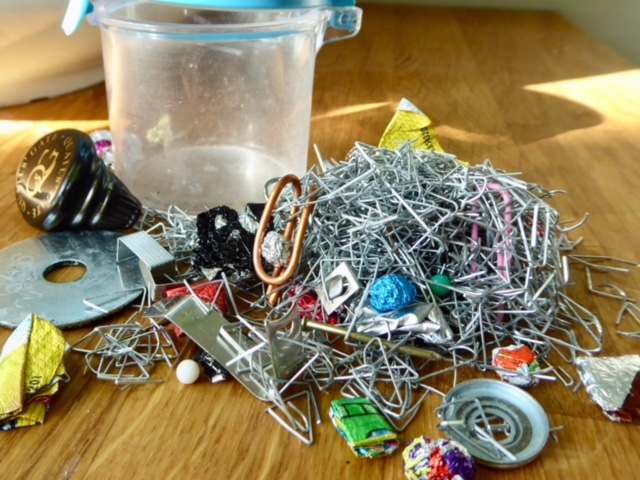
This container is cute, it's little, and it's visible. 


It sits in front of my desk and reminds me of small successes, everyday.


~2 years of collecting bits. <500g of mixed metals.


I put this in a soup can and crunch the can closed.
I take it to an Eco Station and throw it in the "Scrap Metal" bin.


What odd items do you collect for recycling? reuse? or composting?
Visit edmonton.ca/recycling

Rodney became an MCR in 2008 and it still enriches his life for the better. He searches for new ways to collect and sort, reduce and reuse. Collecting staples doesn't work for everyone and that's okay. It sure works for Rodney.


Wednesday, March 7, 2018

Time to Save Your Eggshells by MCR Maria K.

As an avid gardener and Master Composter Recycler (class of 2007), I’ve learned a lot of wonderful garden tips that have helped to reduce the work of our City’s waste collectors. Here’s a small and simple trick, one of my favourites, that I employ every year, all year long, and it’s really easy!


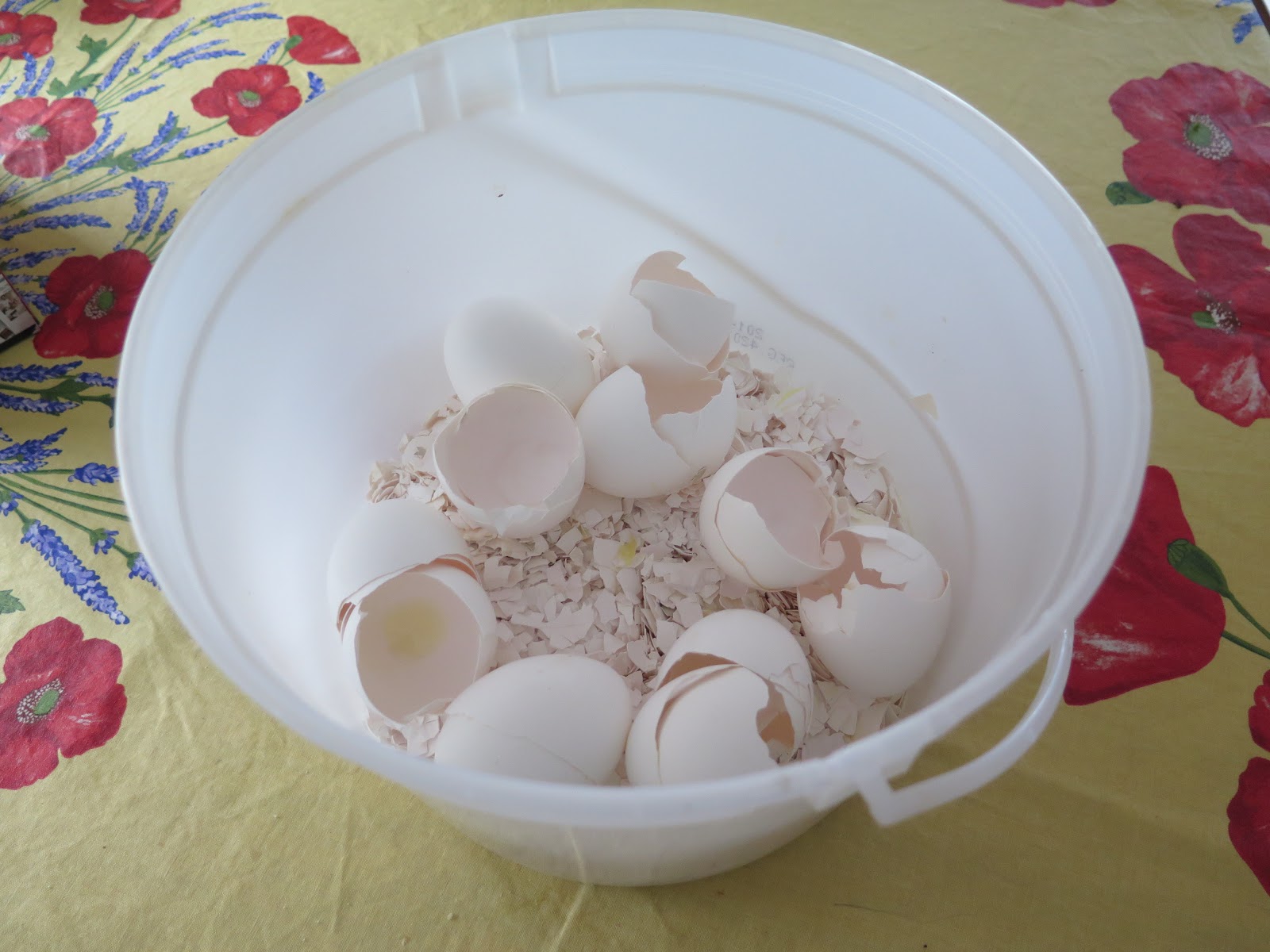
There’s an ice cream pail under my kitchen sink, all year, for eggshells. Why? Because they are an excellent mineral resource and slug discourager. I don’t even bother to wash them because I find they dry out in the pail. When my pail gets full, I take a potato masher and mash them down so that I can add more. By spring planting, I usually have a pail or two that are at least three-quarters full. (My family likes eggs, what can I say?)

Eggshells have nice sharp edges, so I use them pretty liberally wherever I plant lettuce and other veggies that slugs consider tender vittles. Basically, I plant the seeds in the soil, and cover the seed bed with eggshells, and the plants find their way through, no problem. In a few weeks, it looks quite pretty, eggshells with greens.

Tomato plants, in particular, really appreciate the calcium from mashed eggshells. I try to keep some on hand at all times and use a few hand-fulls wherever I see slug trails in my yard. You could say my slug population has really decreased over the last ten years!

And here’s a little bonus tip: When you get your hair cut, ask for the trimmings. Turns out hair is a nice source of slow-release nitrogen – another favourite snack of most plants.

Why give away eggshells and hair clippings (pet fur, too) when they are great resources for growing things?

Even if you’re not a gardener, chances are that you know someone who is. Offering them your eggshells is a great conversation starter about waste reduction. Why not try it?

Visit edmonton.ca/compost


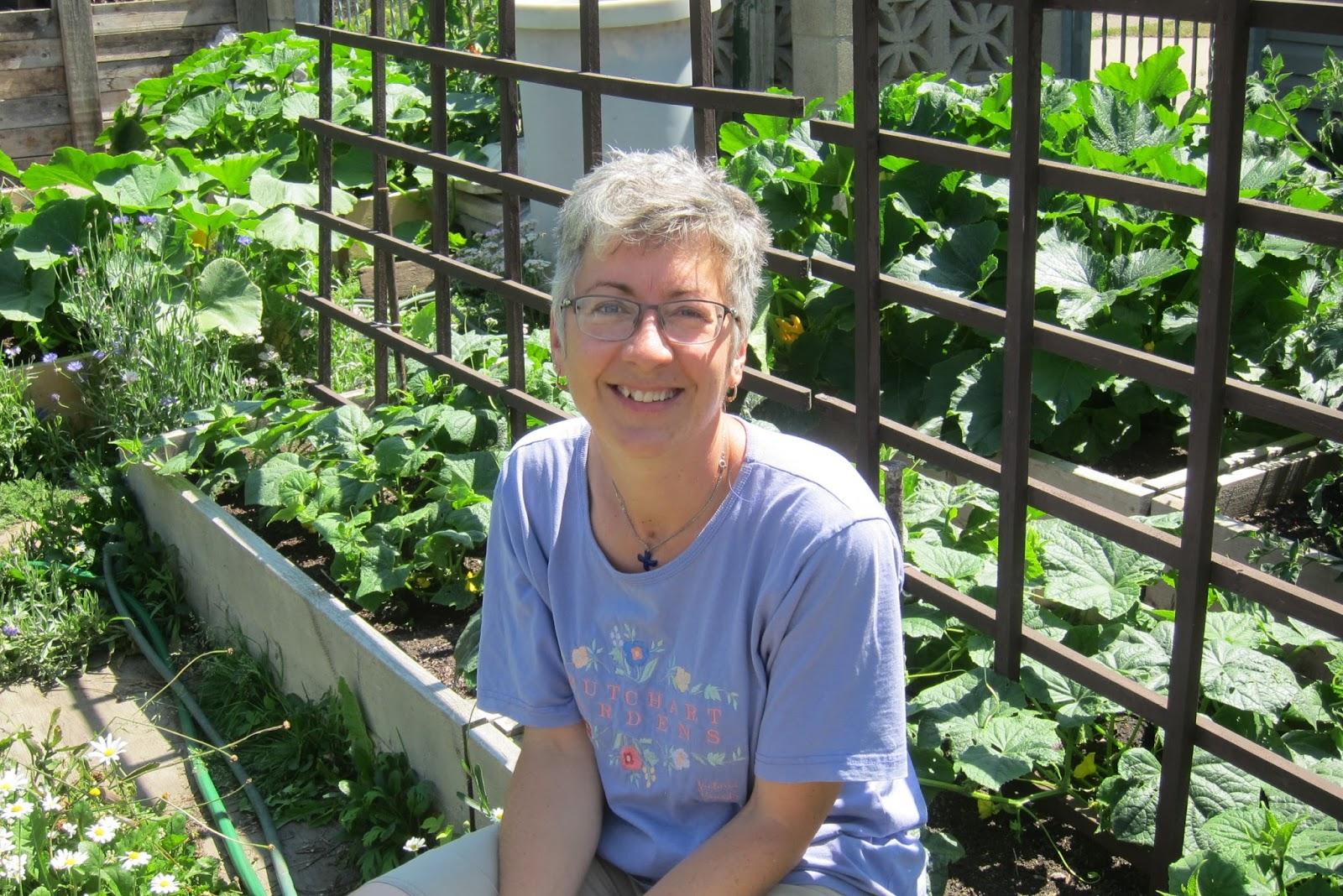
https://blogger.googleusercontent.com/img/b/R29vZ2xl/AVvXsEi0rpOkCnkGfFwWsKzxYRp1u6fVQRuft73SmKLoed6h0dNLiude6Bi5-WzQuMpXrX7T32MByJyr76Jj452VB_oa7aQbvaT-b5J24HGz2kKaFU0424ouQndXobRm8H4HkMBeJU9mMvtM1ok/s1600/Maria+K+for+blog.jpgMaria K. is an MCR who is all about living simply, reducing consumption and waste, gardening, and feeding the soil we depend on for good food. She has more Simple Suggestions at simplemoodlings.blogspot.ca.


Friday, January 19, 2018

You Are What You Don't Eat by MCR Eve C.

A Book Review: Two Perspectives on Food Waste

Statistics on food waste are sobering. In the US, it is estimated that 40% of food produced is not eaten.[1] In Canada, only 71% of the calories purchased are actually consumed.[2] However, despite growing awareness of this issue, food waste numbers have not budged. Although the problem can be clearly articulated, it is much less clear why we are so wasteful and what we can do about it.
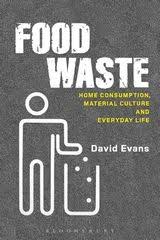
  Two books, David Evans’ Food Waste: Home Consumption, Material Culture and Everyday Life and Dana Gunders’ Waste Free Kitchen Handbook: A Guide to Eating Well and Saving Money By Wasting Less Food provide a much needed practical look at food waste on the individual level. Rather than simply bemoaning our culture of disposability, these books provide evidence-based insights into why people actually waste food.

  Evans’ book is a sociological study of individual food waste habits in a neighbourhood in the U.K. He approaches the issue from a refreshing perspective. He emphasizes that he is not aiming to write a polemic on the issue or to judge individuals for their waste, but instead tries to understand why people cannot seem to stop wasting large quantities of the food they buy. Evans’ focused look on a dozen or so people shows that individuals’ reasons for waste are very different, and hence any change must focus on these individual motivations. 

  The modern tension between the desire to eat as healthily as possible and a lack of time seems to be at the root of much food waste. Busy lives lead to routine, including buying the same items each week whether or not last week’s groceries have been used up. The people described in Evans’ book also sometimes abandoned plans for healthy meals and snacks in favour of convenience food, which is cheap and readily available. Several of the individuals wrongfully believed fresh produce is always better than frozen vegetables and fruit. This misconception often leads to greater food waste, especially when only a small part of a vegetable is used to produce a healthy meal, and the rest discarded.
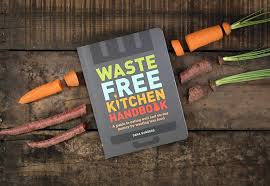
   In Waste Free Kitchen, Dana Gunders provides realistic solutions to the food waste problem. Her credentials make her an expert on this issue; she works as Senior Scientist at the US Natural Resources Defense Council (NRDC). Similar to Evans, she identifies a number of typical reasons for excessive food waste:

      • Wishful thinking: for example, buying ingredients to make a healthy smoothie, even though you do not like smoothies.
      • Too-large portion sizes: many of us buy and cook meals with portion sizes that are often beyond what we can, or should, eat. For example, recipes in the classic cookbook, The Joy of Cooking, have increased by 33.2 percent since 1996.
      • Lack of kitchen know-how: we either buy food we do not know how to prepare, or lack the skills to incorporate leftovers into future meals.
The overall framework of Gunders’ book is based on simple suggestions that we have all heard before:

      • Meal plan and shop with a list.
      •  Use an online portion calculator to ensure you are not cooking too much.
      • Plan ahead. Do not assume you will cook everything from scratch or even home cook every meal. How often do you end up meeting and eating with friends and family? Be realistic.
Gunders also provides a number of scientifically-sound tips regarding food storage and safety. A major reason why people dispose of food is because they are not sure if it is still safe to eat. Erring on the side of caution, they toss items that are still perfectly safe.

   Food poisoning can be very serious, even fatal, and people are not willing to risk their families’ health unless they are given sufficient information about when food becomes unsafe to consume. Gunders does an excellent job providing consumers with useful information meant to help them confidently make decisions about food safety in their own kitchens. She prefaces this information with a disclaimer that special groups need to be more careful: individuals who are pregnant, babies and toddlers, the elderly (75+), and those who are immune deficient.

   Gunders explains that food poisoning is usually either due to infections by living microorganisms or toxins they produce or other toxins in food, not by the decomposing process per se. This means that anything that will make you sick is usually in the food before you even get it, and does not just develop as perishables age.  

   Furthermore, and despite their ubiquity on packaged food, expiration dates are not regulated, and are not reliable indicators that a food is, or is not, safe to eat.[3] It is entirley up to manufacturers to decide how to date their food. The date could be based on lab or consumer tests, and often indicates when the food is no longer at peak freshness, rather than having anything to do with food safety.

   Surprisingly, eggs are OK to eat 3-5 weeks after sell-buy date. Given that many stores only sell eggs by the dozen, it is very helpful to know that an egg does not go bad as rapidly as the sell-by date would suggest.


Gunders’ tips about properly organizing your fridge were also very interesting and easy to implement:
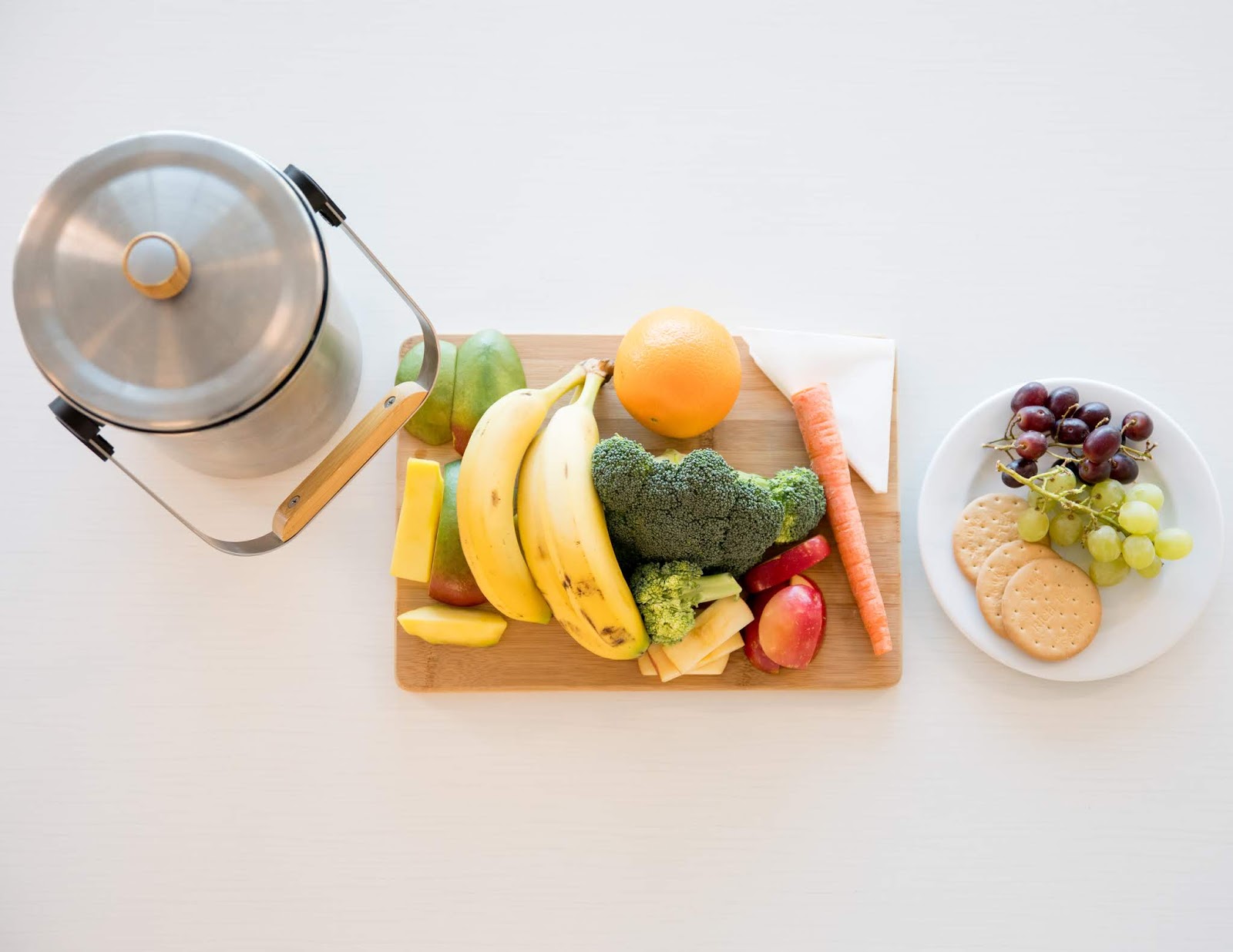
      •  For maximum longevity, stand up some produce in the fridge, in a glass or container of water, resembling flowers in a vase: cilantro, basil, asparagus, kale, etc. (From my own experience, I would recommend dedicating a container as an herb vase to avoid scents from absorbing into your glasses.)
      • It is key to keep your fridge at 4°Celsius. It is might be helpful to buy a thermometer if you don’t have one in your fridge already.
      •  The bottom shelf is coldest, so keep meat there. This is also good in case meat drips.
      •  Keep an 'Eat Me first box' to make items that need to be consumed visible.
      •  Keep nuts in the fridge if they will not be used up in a week or two.
   The book concludes with a directory listing common foods and includes valuable information for each - how long it lasts, how to store it, freeze it, keep it in a root cellar, use it up, or even revive it. Gunders also included recipes for foods that are more difficult to use up: including “anything-goes -soup”, sautéed lettuce, and frozen banana purée.

   Although food waste may not simply be conquered by exposing people to alarming statistics-if we become attuned to the reasons why we are wasting food-we may be able to make small changes in our habits to ensure that more of the food that we buy is actually eaten.  

-Sources- 

Food Waste: Home Consumption, Material Culture and Everyday Life: by David Evans. Bloomsbury Academic: London, 2014.

Waste Free Kitchen Handbook: A Guide to Eating Well and Saving Money By Wasting Less Food: by Dana Gunders. Chronicle Books: San Francisco, 2015.


[1] Waste Free Kitchen.
[2] https://www.statcan.gc.ca/pub/16-201-x/2009000/part-partie1-eng.htm
[3] With the exception of baby formula.