Wednesday, November 7, 2012

Waste Around the World by MCR Lee Davies


Originally, I thought I would write a comparison of how the citizens in different municipalities are exposed to waste management in their respective environments. After doing a little bit of research and reading, I discovered it is so much deeper than educating the masses about waste streams. It also became a lesson in forward thinking leadership with vision in mind.

History
In a world that has gone through several social changes over the past 100 years, one common question throughout these changes is this: what to do with our waste? Before the industrial revolution the sparse population density kept waste management under the radar. It was a minor nuisance but manageable within the society parameters. There are a few cited cases of waste posing a problem in history such as the first official waste dump site in 500 BC in Athens, Greece. The city officials made it a law that refuse was to be moved out of the city limits. Then in Paris, in 1400, the piles of refuse just outside the city limits compromised the city’s ability to adequately defend itself. As the industrial revolution changed the way we lived, manufactured and did business, it also brought issues with waste management. Concentrated populations in cities bred disease and filth based solely on our human inability to effectively deal with waste - progress was far too important.

As western society of Europe expanded, so too did the inability to deal with the foot print of waste.  In world waste management history there are glimpses of our ingenuity in dealing with our manufactured by-products – reusing and recycling. However, human nature prevailed and the “reclamation of swamp land into usable space for human expansion” by depositing garbage in these spaces became the norm. We didn’t put any thought into the “footprint on our environment” at the time. As we “reclaimed” previously unusable land, the population exploded and no sustainable plan was put in place as the waste was “managed” – out of sight out of mind as our society’s dirty little secret.

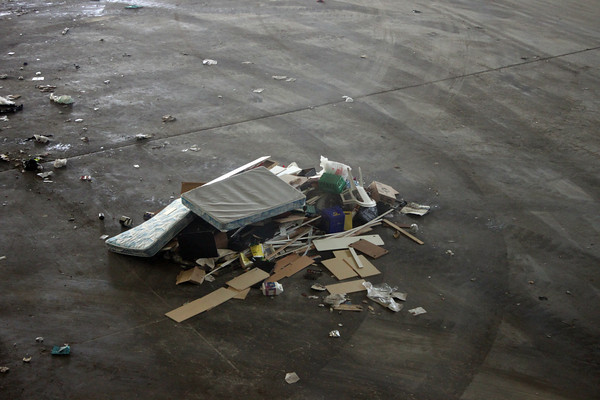
This brings us to present day, where waste management is probably one of the fastest growing industries now and arguably in the future. Politicians are now mandating we look after our carelessness of the past and start to re-educate the population, after years of just sweeping the garbage under the rug. As much progress as Edmonton has made – and Edmonton is truly a leader in becoming a “zero landfill” community – it was an eye opener on what is happening elsewhere in the world.
Calgary
To start with, the City of Calgary introduced their first residential recycling program in 2009 and started down a path of re-education. Calgary states they achieved 23% landfill diversion in 2009 due to their recycling program. They aim to reach 80% diversion-from-landfill by 2020. They are currently doing research and pilot projects to improve waste management and processing.
City of Calgary - Waste & Recycling Services 2011

Toronto
The City of Toronto faced a similar challenge as Edmonton; their only landfill was rapidly filling up in the late 1990s and they needed a solution. Their response was to export waste to Michigan, and they signed a contract with a landfill in Michigan that they started to use in 1998, and used extensively from 2002 to 2010. The contract expired on December 31, 2010.  In 2007, the City of Toronto bought another landfill site 200 km outside the city limits and started using this landfill exclusively in January 2011. They are trying initiatives to divert waste from the landfill and have a goal of 70% diversion by 2034. If they don’t meet their waste management initiatives, the landfill that they just started using in 2011 will be full by 2025.
City of Toronto - Green Bin Program History
City of Toronto - Solid Waste Management Services

New York
My research about waste management in New York City was the most eye opening. They had the largest sanitary landfill in the world, and it closed in 2001 - the Fresh Kill Landfill on Staten Island. The mayor, at the time, adopted a long-term plan (20 years) to export all the city’s waste to several out-of-state landfills, as far away as Virginia.  The waste was trucked over ground, further polluting the environment. In 2006, the new mayor proposed a transfer station on the waterfront, so the waterways could be used to transport waste more cheaply, to landfills further away - which that didn’t charge as much for disposal. The city is also spearheading initiatives for citizens, incorporating reducing, reusing, and recycling. But these initiatives do not seem to be curbing the “busy lifestyles” of New Yorkers. They are still some of the largest generators of waste (per capita) in the world. Political leaders in New York have run into resistance when proposing changes or spending large sums of capital to address waste. As long as the politicians feel that they can keep making the waste of New York someone else’s issue, there will be no real leadership capable of a resolution in solving this large problem.
NYC recycle more, waste less
NYC Takes the Garbage Out - columnist

Switzerland
In Europe, Switzerland has the highest recycling numbers for plastic bottles in the European Union (80%); where Greece sits at just 1%. Also waste is incinerated more often in European countries, with Denmark leading the way at 62%. There are several other initiatives in Europe to curb the amount of waste going to the dwindling number of landfills. Again, Switzerland has free recycling but charges customers per bag of waste. The European Union also is increasing the amount of “wet waste” being composted, however a report published by European Union - Joint Research Centre, Institute for Environment and Sustainability claims that 40% of bio-waste is still landfilled (2011, not including all biodegradable waste). Europe is still struggling with waste management as a viable option for renewable and reusable resources.
Supporting Environmentally Sound Decisions for Bio-Waste Management

Edmonton
After researching the waste management of other municipalities and countries, it bring out a sense of pride for Edmonton's waste management systems. Especially all the systems that we currently have in place, and coming soon, to reduce our waste footprint. There are companies in the world that rival Edmonton’s technology in reducing waste and making waste management strategies viable, but all the reading and researching I did for this blog, I didn’t come across any other institution, entity, company, country, person, place or thing that rivals the complete picture that Edmonton has envisioned and made a reality. When you recycle your plastic bottles, recycle your used tires, or just plain throw out the “trash”, the reality in Edmonton is, even without educating the masses, we have done our part in making sure waste management is a priority.

_________________________________________________________________________________


Lee Davies
City of Edmonton - Master Composter Recycler

I grew up in rural Alberta where composting and reusing was a way of life. So joining the Waste Management branch was a good fit. I graduated from the Master Composter Recycling program in 2009.

I own and operate a landscape construction company in greater Edmonton, where 50 percent of my business is residential and 50 percent commercial.

I have great opportunities to involve residents with waste management in their landscapes by recommending composting areas, reusing landscape materials, and grasscycling in their maintenance programs.

Tuesday, October 23, 2012

Talking garbage in China

We definitely won't ship garbage to China. But, we will start doing garbage business in China. And that's exciting.

A couple weeks ago, Mayor Mandel announced a new corporation: Waste RE-Solutions Edmonton. Maybe you saw the news. We are really starting to profit from our knowledge. news release

Waste RE-Solutions Edmonton is owned by the City of Edmonton and will sell expertise about waste management to cities around the world. The corporation will focus on China, at first.

Building for years

Edmonton has gained national and international attention, over the years, for our garbage. Hundreds of over-seas visitors, every year, come to the EWMC. And, slowly, we built relationships with cities in China.

Selling our expertise shows that Edmonton is a model that other cities can learn from:
  • an integrated system
  • strong participation by citizens
  • best practices in residential, commerical, & construction waste
  • based on partnerships (e.g. Greys Paper, Enerkem, GEEP)
Best of all, Edmonton will stay a leader in waste. And that's good.

              from this:

             to this:

Highlights: Waste RE-Solutions Edmonton

  • Owned by the City of Edmonton
  • Sells expertise about waste management to governments
  • Focusing on opportunities in China (to start)
  • Partnership with Canfit Resource Recovery (Beijing)
  • No impact on regular services of Waste Management Services
  • If cities want more community engagement, Edmonton's MCRP might be one strategy

Official Message

from Roy Neehall, Manager of Waste Management Services...

It is with great pleasure that I inform you today Mayor Mandel announced the establishment of Waste RE-solutions Edmonton, the entity under which we will market our expertise.  The contribution made by all areas of our Branch in delivering sustainable programs to our residents made the decision by Council a unanimous one. Our initial project focus will be Beijing but opportunities will be actively pursued in other areas. Our partners at the  Edmonton Waste Management Centre, Greys, Enerkem and GEEP, will work with us where it is mutually beneficial to do so. We are at the early stages of this business opportunity but I am confident that it will be a success in the years ahead drawing on the significant talent that exists in our Branch.

Thursday, October 11, 2012

Too Many Choices, Too Little Information


Submitted by Heather Wheeliker, Master Composter Recycler Volunteer with the City of Edmonton

With Waste ReductionWeek occurring across Canada October 15 to 21, this is a good time to re-examine purchasing habits and rethink new ways to reduce waste stream contributions.

It’s not an easy task. I realize that my habits are based on information I learned many years ago. Here’s what I mean: I am often heard saying to colleagues “please ask for 100% post-consumer waste non-glossy paper.” Huh? Where did I ever come up with that? It’s based on understanding what the recycle symbol tells us. 

A Mobius loop means that the product can be recycled. But a Mobius loop within a circle means the product contains recycled material (the percentage of recycled material is usually found nearby and often a qualifier to indicate the percentage of post-consumer waste). To learn more about this topic, refer to the provincial elementary education resource, Get in the Loop

Now about the non-glossy paper; years ago, I was told that a clay coating is added to paper to make it glossy. Don’t get me wrong, I like glossy paper. But knowing that it takes additional resources and energy to coat the paper, often for one-time use, and then this coating must be stripped away during the recycling process and the clay particles dealt with separately, has caused me to rethink choosing glossy paper. That said, things could have changed since I learned about clay coatings, so if anyone knows differently please chime in. For now, I will continue to request non-glossy paper.

Certification logos play a role when I am choosing products. Have you ever tried to purchase a green cleaner? I spend way too much time reading labels, trying to figure out which is going to be the least harmful to the environment—and to my lungs—but still get the job done. The print is small, and it’s easy to miss a critical piece of information until you get the product home and in good reading light. My latest tactic is to look for a logo. And because we live in Canada, I look for products carrying the EcoLogo certification stamp of approval. This tells me that, at the very least, the product has been reviewed by a third party, and has met or passed pre-determined environmental standards. OK, I’m ready for the criticism that I should make my own cleaner. But I’m busy these days and it’s enough for me to actually do the cleaning let alone make the cleaner first. Until I have more time, I will continue to look for the EcoLogo label.


Another common logo I look for on wood or paper products is from the Forest Stewardship Council (FSC). This certification program tracks the product from the forest where it was harvested, all the way to the store shelf.  It tells me that the forest is appropriately managed and that communities nearby the forest harvesting operations are consulted and considered as being integral to the forest community. Several printers in Edmonton have a Chain of Custody Certification which means they are approved to use FSC paper as a result of the processes they have integrated into their printing operations. 


Sometimes the more you think about it, the more confusing it can be.  Yet, it seems like a lifetime since I last looked at something as “waste for landfill.” Edmonton offers a world-class waste management system, however the resources embedded within waste materials make me rethink my purchasing and disposal decisions each and every day. My resolve to turn down a coffee served in a disposable cup helps to remind me to carry a mug with me. I set out a yellow pail in our office kitchen to collect compostables from staff and, as a result, I end up with a significant pile of compost each year to spread on my flower and vegetable gardens. I reuse as much as possible, I try to avoid impulse shopping. But I’m certainly not a perfect role model for waste reduction. We all get caught up in the day-to-day rush of life, and it can be complicated enough without thinking about waste. Yet it seems like the information I learned years ago is simple and memorable enough that I no longer have to think too hard about it.

If you’re still swimming in the deep end on this and hope to remove the complications that surround consumer choices and waste, take an hour during Waste Reduction Week to learn more about waste, and to find and form new habits.  A little bit of sound information and a couple of key logos should help you through. 

Tuesday, October 2, 2012

Volunteer Recognition Event 2012

The 2012 Waste Management Services Volunteer Recognition Event was held last Wednesday, September 26 at the Trans Alta Arts Barns.

Thank you to all of our Master Composter Recycler and Reuse Centre Volunteers! It was rewarding to see a group of over 80 community-minded and waste-concious individuals gathering together. The evening gave us an opportunity to share our stories, congratulate the award winners and nominees, and sample tasty treats from local vendors.


Thank you to all the vendors who took part:


Fruits of Sherbrook
Jams, jellys and condiments made from locally rescued fruit in the Sherbrook neighbourhood.

Gourmet Granola
A selection of locally-made granola.

Blue Kettle Speciality Foods
Ginger dressing with shrimp skewer, penne paster with tomato basil pasta sauce.

Andreanna's Homestyle
Locally-made sausage, cheese, and meatballs.

Smoky Valley Goat Cheese
A variety of locally-made goat cheese.

Vitaly Teas
Canada-made Chai lattes.

Catfish Coffee Roasters
Small batch locally-roasted coffee beans from around the world.


Already looking forward to next year's event! 


Wednesday, September 12, 2012

Worm Bins in the Classroom by Alyson Winkelaar


Here in the Community Relations section (of Waste Management Services), we are gearing up for another school year. With presentations such as Waste and Our World, Choose to Reuse, Squirmy Wormy Composting, and Garbage In-CompostOut, we reached over 3000 students and teachers during the 2011/2012 year.

Squirmy Wormy Composting presentations
With these presentations, we brought the wonderful world of worm composting to nearly 100 classrooms last year, alone.  During the presentation, students are taught how red-wiggler worms can help us with the fundamentals of waste management: the 3 Rs. Much of the food waste that comes from our kitchens and lunches can be Reused as a food source for our red-wiggler worms, helping us Reduce the amount of waste we throw away every day. By munching and digesting, the worms Recycle our food waste into high quality compost that can be added to our potted plants and garden beds. The students are taught how to care for the worms. They learn that worms will thrive with the right balance of moisture, air, food, and shelter.
Most times, we leave a small worm bin behind. It is stocked with worms and bedding material so the students can enjoy the benefits of compositing, right in their classroom.

How We Can Improve
One thing we want to improve is support for the worm bins that we leave behind. Every once in a while, we get a panicked call for help from a teacher whose worm bin has turned into a smelly bog, the worms are desperately clinging to the sides or trying to climb out, and food is sloshing around the bottom. Of course, that's if any worms can be found at all! We worry that, when things go wrong, teachers will just throw out their worm bin...  rather than ask for help. We want to support teachers, so they have a good experience with worm composting. 

How MCRs Can Get Involved
We are looking for volunteers to help with our School Worm Team.  Lots of Master Composters Recyclers have agreed to be a Compost Doctor (making house calls to assess someone's backyard compost bin). The School Worm Team is Compost Doctoring at its finest!  Volunteers will be matched with schools in their area that have recently had a Squirmy Wormy Compost presentation.  MCRs will contact the teacher two or three weeks after the presentation to see how things are going with their worm bin.  If help is needed, either advice over the phone or a quick visit with the teacher will help put their worm bin back on track. 

This new grassroots School Worm Team initiative is important because it is neighbours helping neighbours. We would love to revisit schools and see thriving worm compost bins in the classrooms that are actually being used to help reduce the amount of waste being thrown out at schools throughout Edmonton. This is a super simple way to volunteer and get to know your local schools at the same time!


Sign up for the School Worm Team at myVolunteerpage.com

Alyson is a Program Specialist and has worked for the City of Edmonton (Waste Management Services) since fall, 2011. She already delivered 3 presentations for the school year and is excited to do many more. Alyson became a Master Composter Recycler in 2012. Outside of the world of waste, she is an accomplished dog trainer.