Showing posts with label composting toilet. Show all posts

Monday, June 18, 2018

Recap: MCR Munch & Mulch (June, 2018)


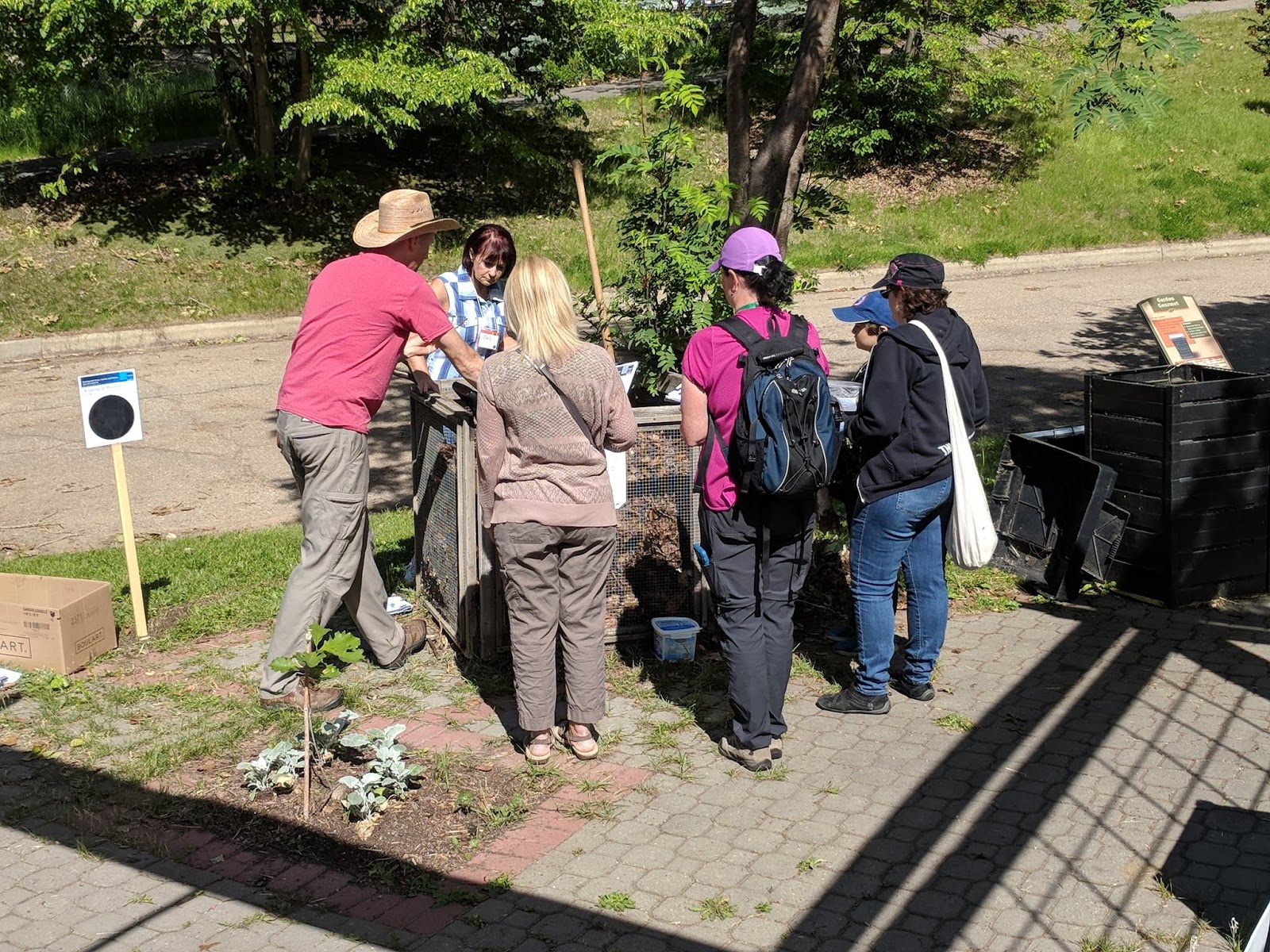
20 MCRs enjoyed a sunny, spring morning at Compost 'S cool, last Saturday. In good company, we learned, we chatted, we discussed, and we played in the dirt.

5 Ways to Deal with Grass, Leaves, and Plants... But Not "Compost"
  • Mad Science: bokashi, extracts, teas & brews
  • A Sensus of Humus: how to make leaf mold
  • Interment: burial, trenching & double digging
  • The Green, Green, Grass of Home: going bagless (grasscycling)
  • Litter Bugs: chop & drop, deadheading, mulching & lasagna gardening
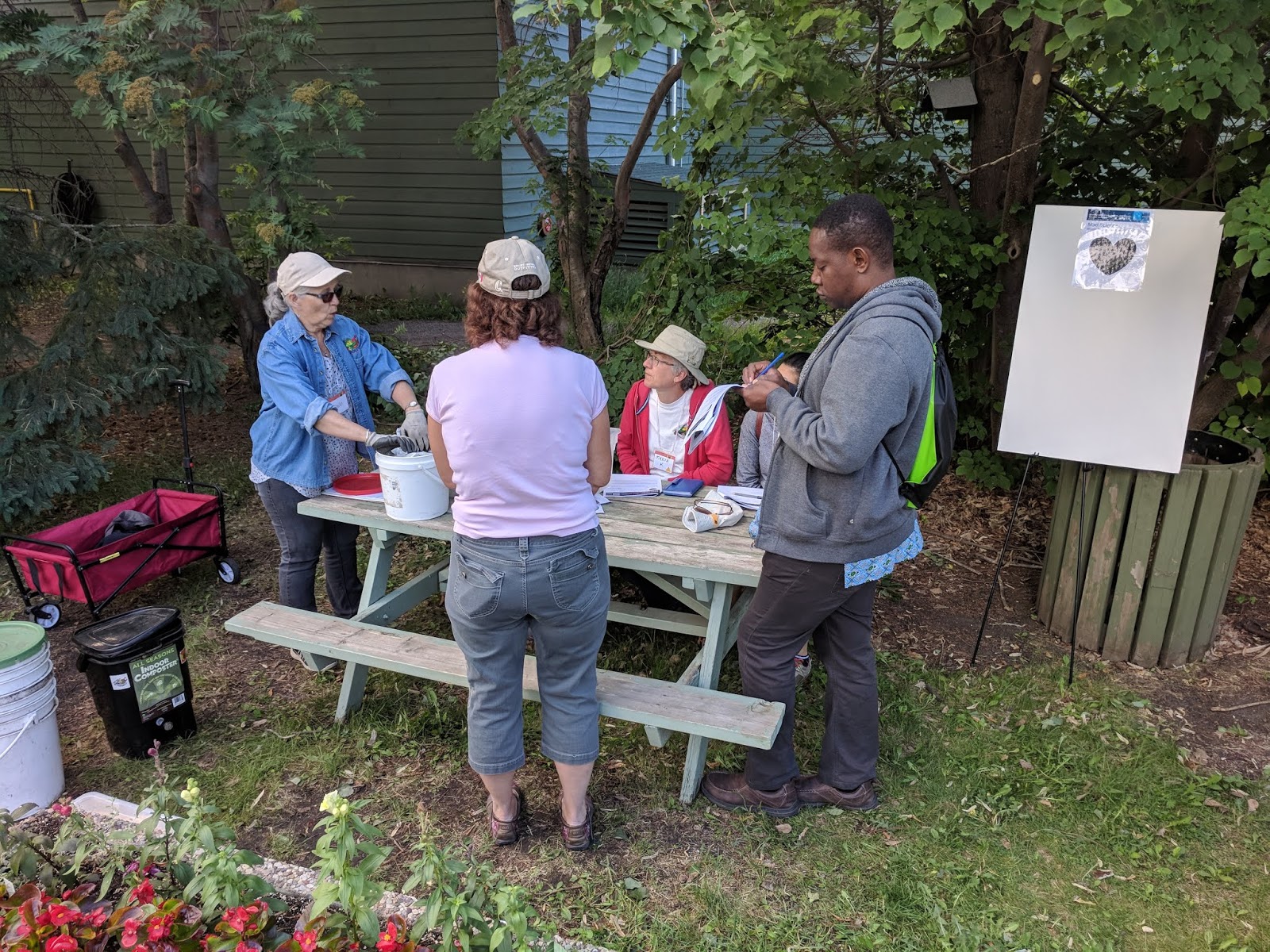
The group broke into four teams. Each team toured all four stations to learn about the topics above. At each station, one person from the team led a chat about the station.

Special thanks to MCR Deb P. She hosted the Mad Science station and taught us about bokashi. She even sent folks off with samples of EM (effective micro-organisms) to try their own bokashi compost.

The day ended with a fun game of Compost 'S cool charades.

Congrats to all those MCRs who were recognized for reaching milestones and long service. You rock!

We look forward to seeing everyone at the MCR Tree Planting, in July.

Stay in Touch: 5 Easy Ways to Record
   

Wednesday, July 22, 2015

Composting Toilet Harvest 2015

What's your favourite way to spend a Sunday morning?
If you answered "muck around with a composting toilet," you might just be an MCR!

What does a toilet compost?
Yes. Exactly what you think.

Our compost gurus, Mark and Sheridan, led the charge of harvesting finished compost from the Composting Toilet at the Compost 'S cool. This gem is tucked away in the river valley, at the

The toilet was last harvested in summer 2013, and Mark has been patiently tending the new "crop" these past two years. Waste that gets flushed is combined with wood chips and is turned regularly, just like a regular compost bin.

Mark and Sheridan were joined by 4 enthusiastic MCRs, who were eager to see the finished product, and learn about how to use this compost, sometimes called 'humanure'.

Theoretically, the temperature in this system can get high enough to kill pathogens like E.coli, but for safety reasons, you should never use untested humanure to grow food crops. You should also avoid putting it where children play.

If you want to try it at home, we can help with the how-to's and the health & safety information.
Email compost@edmonton.ca

Compost from the Composting Toilet makes an excellent soil amendment for ornamental garden beds! It's full of valuable nutrients that our bodies can't process.
Our perennials have been going strong since the last harvest.

Our intrepid MCRs suited up with sturdy gloves and dug the compost in around the prickly rosebushes and juniper plants. This compost always gets dug in doubly deep. It's safer that way, plus it's right where the roots can take in all of those nutrients.

Special thanks to our MCR helpers: Alena M., Harvey G., Erika D., and Rosemary F.! 

Tuesday, September 10, 2013

The Great Toilet Harvest of 2013

Our Composting Toilet opened for business in 2007, at the John Janzen Nature Centre. The toilet shows that we can compost even that stuff.

Visitors to John Janzen Nature Centre and the Compost Education Centre have been peacefully contributing ever since. On August 24th, seven compost fanatics met to harvest the Composting Toilet for the very first time.

Megan & Andrew getting composty

How it works

Wood chips get mixed with the "fresh compostables" - liquids and solids - in the toilet. Micro-organisms thrive on both types of nitrogen- and carbon-rich materials to break down the waste. Then the whole batch is gets stirred, regularly, to introduce new waste for the organisms.

We have been surprised by the Composting Toilet. Most of all, it's taken almost six years to have enough finished compost.

Adding the finished compost
Site when we were done

Harvesting the finished product

First, we dug a trench near our perennial plants - away from food crops. Next, we dug the trench again. This makes a trench that is doubly-deep.

Then we harvested finished compost and mixed it into the trench, along with some soil. Finally, we topped the trench with the layers of soil.

When finished, the compost amends the soil and encourages roots to develop deep. We made sure to keep this humanure compost away from food crops and away from contact with visitors.

Special thanks to those MCRs who helped with harvesting: Maureane D., Mary-Jo G., Hannah H., Andrew J. and Megan M. Our tireless organizer was Ella W., our compost educator extrordinaire (and summer staff).

Most of all, thanks to Mark S.
He has tended the Composting Toilet for more than 5 years. He is the first one to stir the "compostables" in spring. He preps the "catchment" at the end of fall. And he replenishes the wood chips and air fresheners in the dead of winter. Thank you, Mark.

More Info

Monday, July 16, 2012

Pit Stops: John Janzen Nature Centre CT

Reblogged from The Dusty Musette


Tucked away in a western cranny of Edmonton’s river valley, between Fort Edmonton Park and the John Janzen Nature Centre, stands a marvel of elegant, simple, sanitary-engineering  design. It’s a composting toilet (CT), made by Advanced Composting Systems of Whitefish, Montana, and it’s situated in a small raised structure next to a cycling path. The staff of the Nature Centre look after it, and they keep it remarkably clean and well stocked; I’ve used it many times and never been caught wanting for supplies. Sometimes there’s even actual Purell in the hand-cleaner dispenser.

My guess is that the Nature Centre folks see the CT as a kind of environmental PR project, promoting the possibilities of composting. (There is, in fact, a Compost Education Centre at the Nature Centre across the trail). So I suspect there’s a kind of pride factor that helps explain the pristine condition of this craphouse. A sign inside explains how the toilet works—making vague reference to mysterious “organisms” that live down below and go to town on the unsavoury deposits in such a way that renders said deposits benign, odorless, heck, even beneficial. The sign refers to the end-product as “a rich, well-stablilized mulch.” And here’s the amazing thing: the place is completely odorless. A quick glance down the hole would make you think that’s impossible, but I’m here to testify that the place absolutely does not smell in any way toilet-y. Actually, it smells kind of peaty, in a subtle, earthy way, like a fine single malt Scotch.

Read more